

Nelson Mandela University (NMU)
Nelson Mandela University (NMU) is one of South Africa’s leading comprehensive universities, located in Gqeberha (formerly Port Elizabeth), Eastern Cape Province. The university is committed to developing scholars, leaders, and engaged citizens who create positive change in their communities and contribute to national development. With a rich history of excellence in teaching, research, and community engagement, NMU has established itself as a premier institution offering world-class education across multiple disciplines and professional fields.
The university is fully accredited by the Council on Higher Education (CHE) and recognized internationally for its academic programmes and research contributions. NMU operates across seven campuses strategically located in Gqeberha and George, with the South, North, Second Avenue, and Ocean Sciences campuses situated in the scenic Summerstrand area close to the beachfront. The institution enrolls over 30,000 students and offers more than 500 undergraduate and postgraduate degree programmes across seven faculties.
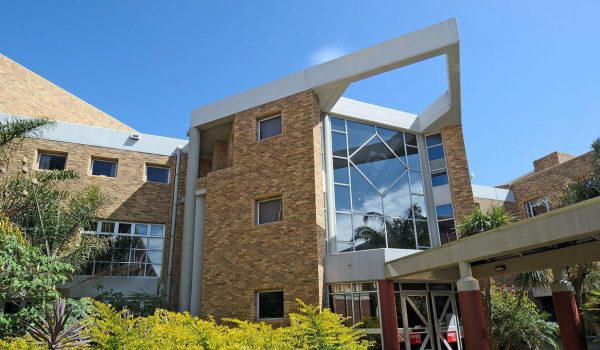
Nelson Mandela University operates seven strategically-located campuses serving students across the Eastern Cape Province. In Gqeberha (Port Elizabeth), the university maintains four main academic campuses: South Campus, North Campus, Second Avenue Campus, and Ocean Sciences Campus, all positioned in the popular Summerstrand area with proximity to beaches and coastal attractions. These campuses house faculties in arts, business, education, engineering, law, and science, with specialized facilities for each discipline. The George Campus in the Garden Route region serves students in that area.
Each campus features specialized facilities including engineering workshops with modern equipment, business simulation centers, health sciences clinics and simulation labs, research facilities, computer centers with updated technology, library branches with extensive resources, sports and recreation facilities, and student residences. The campuses are well-integrated into their surrounding communities with transport links, retail facilities, and accommodation options nearby.
Tuition fees at Nelson Mandela University for 2026 range from approximately R20,736 to R42,876 per annum for undergraduate programmes, varying significantly based on the specific degree and module selections. Engineering and Science programmes typically fall at the higher end of the fee range due to laboratory requirements and specialized equipment access. Business and Humanities programmes generally fall in the mid-range. The university allows students to create personalized fee estimates through its online system by selecting their specific modules and degree plan.
Additional costs students should budget include accommodation (ranging from R35,000 to R70,000 per annum for on-campus residence), textbooks and learning materials (R2,500 to R5,000 per annum depending on programme), technology and course materials (R1,000 to R3,000 per annum), and student union fees and campus amenities (approximately R2,000 per annum). NSFAS-eligible students with household income below R350,000 per annum qualify for full tuition subsidies, accommodation allowances, transport grants, learning material support, and living stipends.
NSFAS (National Student Financial Aid Scheme) is a government loan scheme providing comprehensive funding to eligible South African university students. To qualify for NSFAS at NMU, students must be South African citizens, have been admitted to a degree programme at NMU, and meet household income thresholds (maximum R350,000 combined gross family income per annum, or R600,000 for students with disabilities). NSFAS at NMU provides support for tuition fees, accommodation, transport allowances, learning materials, and personal care.
NSFAS as a Loan-Bursary Hybrid: While NSFAS is technically a loan scheme, up to 40% of the amount can be converted into a non-repayable bursary depending on academic performance and repayment behaviour. Students who maintain at least 70% average grades and complete their qualification within the minimum prescribed time may qualify for significant discounts on remaining loan balances.
Institutional Bursaries and Scholarships: Nelson Mandela University offers substantial institutional bursaries awarded on academic merit, financial need, and specific criteria. Faculty-specific bursaries support students in engineering, health sciences, and teacher education. Alternative funding includes Funza Lushaka (for teaching candidates), DHET bursaries, and Eduloan/Fundi student loans for those not NSFAS-eligible.
Admission to Nelson Mandela University undergraduate programmes requires completion of National Senior Certificate (NSC) or equivalent qualification with specific subject prerequisites depending on the programme. All applicants are assessed using the Application Point Score (APS) calculated from your top 6 NSC subjects (excluding Life Orientation). If you attended a quintile 1-3 school and achieved 50% or above in Life Orientation, you receive an additional 7 bonus points. Minimum APS requirements vary by programme: a general BA typically requires APS 24, while Engineering programmes require APS 34 or higher.
Subject-specific requirements are critical for admission: Engineering, Science, and Health Sciences programmes require Mathematics and Physical Sciences with minimum 60-70% performance (APS 4-5). Commerce and Business programmes require either Mathematics or Mathematical Literacy. Law programmes typically require higher overall grades and specific humanities subjects. Applicants with 40 APS points or above receive firm offers, while those with 37-39 points are placed on hold until September for Dean consideration if spaces remain.
Applications to Nelson Mandela University are submitted exclusively through the online application portal accessed via nmustudentportal.co.za. To apply, prospective students must create a portal account using their email address and personal information, complete the detailed application form with educational history and programme preferences, upload required supporting documents, and submit. Required documents include a certified copy of your identity document or passport, certified copies of Grade 10 and Grade 11 academic records, and Grade 12/NSC certificate with examination results.
After submission, applicants receive email confirmation and can track their application status through the portal. Admission decisions are communicated via email, typically from August onwards. Application fees are waived for South African citizens but international students pay a non-refundable application fee of R500. Once admitted, successful candidates receive detailed registration information including payment requirements, orientation dates, and online registration procedures for the January 2026 intake.
Nelson Mandela University offers an extensive range of bachelor and honours degree programmes across seven major faculties: Faculty of Arts, Faculty of Business and Economic Sciences, Faculty of Education, Faculty of Engineering (Built Environment and Technology), Faculty of Health Sciences, Faculty of Law, and Faculty of Science. Example programmes include BCom (General), BCom in Accounting Science, BEd (Senior Phase & FET), BEngTech (Civil, Electrical, Mechanical, Industrial, Mechatronics, Marine, Chemical), BMus, BSc (Natural Sciences & Mathematics), LLB (Bachelor of Laws), and BPsych (Psychology).
The university’s faculties deliver programmes combining theoretical knowledge with practical application, research skills development, and workplace experience. Engineering programmes provide specialized technical training with state-of-the-art laboratories and industry partnerships. Health Sciences programmes include nursing, environmental health, occupational therapy, and related disciplines. Postgraduate opportunities including master’s degrees and doctoral programmes are available across all faculties for students pursuing advanced qualifications and research careers.
Applications for Nelson Mandela University undergraduate programmes for 2026 opened in April 2025 through the university’s online application system. The main application deadline for domestic students is typically in mid-August 2025, with late applications considered until September 2025 subject to space availability and specific faculty requirements. International students have separate application deadlines and should contact the International Office for specific cut-off dates. The 2026 academic year commences in January 2026, with orientation and registration occurring in early January for all new students.
NSFAS applications through the national funding scheme closed on 15 November 2025 for the 2026 academic year. Students applying for NSFAS funding must submit applications through the official NSFAS portal and have been admitted to NMU with a firm offer prior to submitting funding applications. Successful NSFAS applicants are notified of funding status by December, allowing time for registration without required upfront payment. The university also accepts applications for institutional bursaries and scholarships throughout the academic year. Postgraduate applications follow different timelines, with most programmes accepting applications until October for the following year’s intake.
Head Office: , all positioned in the popular Summerstrand area with proximity to beaches and coastal attractions. These campuses house faculties in arts, business, education, engineering, law, and science, with specialized facilities for each discipline. The
General and Application Enquiries: admissions@mandela.ac.za