


Tshwane University of Technology (TUT)
Tshwane University of Technology (TUT) is one of South Africa’s leading technology-focused universities, serving approximately 60,000 students across nine campuses in the Gauteng region. Established as a merger of former technikon institutions, TUT has emerged as South Africa’s largest residential higher education institution, offering comprehensive undergraduate and postgraduate programmes across technology, engineering, business, and creative disciplines. The university is fully accredited and operates under the oversight of the Department of Higher Education and Training (DHET).
TUT’s mission centres on providing accessible, quality higher education with a strong emphasis on practical skills, industry relevance, and student success. The university operates eight academic faculties and the Tshwane School for Business and Society. With approximately 60,000 students enrolled, TUT ranks among South Africa’s largest residential institutions, providing affordable quality education to learners from diverse socioeconomic backgrounds.
TUT applications for the 2026 academic year are open with a main application closing date of July 31, 2025 for most programmes. The university continues to process late applications for selected programmes where space remains available. Prospective students are strongly advised to submit applications well before the July 31 deadline.
The 2026 academic calendar follows the standard South African tertiary education cycle, with the first semester commencing in February and the second semester in July. NSFAS applications for 2026 are handled separately from TUT admissions. Students who qualify for NSFAS funding (household income below R350,000 annually) must apply through the NSFAS portal in addition to TUT admission applications.
CAMPUS LOCATIONS & FACILITIES
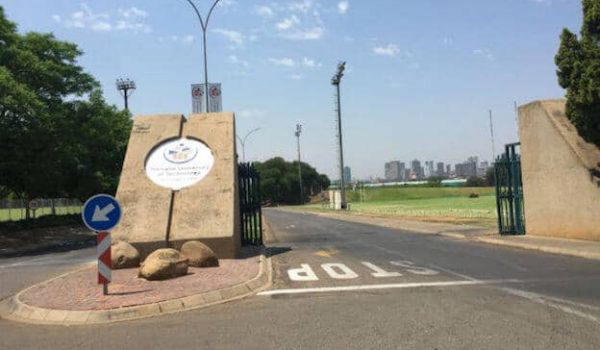
TUT operates nine campuses strategically located across the Gauteng region. The Pretoria Campus serves as the main hub. The Arcadia Campus and Arts Campus in central Pretoria specialise in arts, design, and humanities. Soshanguve North and South Campuses serve large student populations in northern Tshwane. Ga-Rankuwa Campus serves the western suburbs.
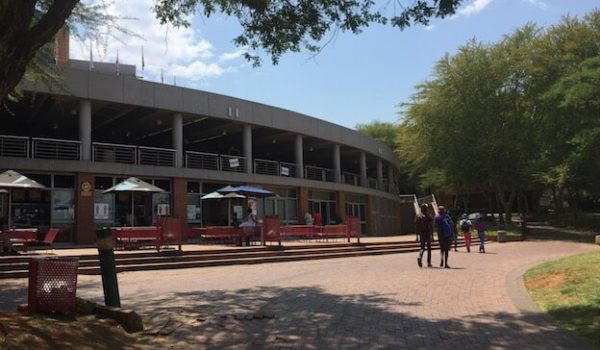
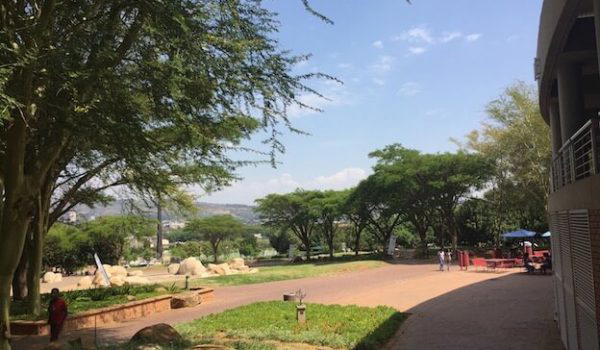
Beyond Pretoria, TUT operates eMalahleni Campus (Witbank) serving Mpumalanga; Mbombela Campus (Nelspruit) in the Lowveld; and Polokwane Campus serving Limpopo. All campuses feature modern teaching facilities, laboratories, lecture theatres, library facilities, student centres, recreational facilities, and secure parking. Residence halls are available at major campuses.

TUT tuition fees vary by programme and faculty. National Certificate and Diploma programmes typically range from R10,000 to R25,000 per annum, while Bachelor’s degree programmes generally cost between R20,000 and R35,000 annually. An admissions application fee of R240 is required. The bus transport levy is R4,010 for the full 2026 academic year. The Fundi meal system costs approximately R20,000 per annum for on-campus meal packages. A Teaching and Learning Technology Lab fee of R150 per annum applies.
No cash payments are accepted on campus. Students must use direct bank deposits, electronic transfers, or credit card payments. Students should budget for textbooks, learning materials, and course-specific supplies beyond tuition. Part-time students may pay fees on a reduced basis, and the university offers payment plan options.
TUT participates fully in the National Student Financial Aid Scheme (NSFAS), providing grants and loans to eligible students. NSFAS funding is available to South African citizens with household income of R350,000 per annum or less. NSFAS support covers tuition fees and provides a living allowance for accommodation, meals, textbooks, and other costs. Applications are processed through the official NSFAS website separately from TUT admissions.
Alternative funding sources include employer sponsorship, government provincial bursaries, and private corporate bursaries from major companies and NGOs. Many large companies offer bursaries specifically for engineering, IT, and business studies students. TUT’s Financial Aid Office maintains information on external funding opportunities and assists students in identifying suitable bursary sources. Financial literacy and debt management workshops are available.
Minimum admission requires specific APS (Admission Points Score) and subject combinations. Most diploma and certificate programmes require a minimum APS of 20 (excluding Life Orientation). Competitive programmes require higher scores. Multimedia Computing requires minimum APS of 23 with Mathematics or Technical Mathematics, or APS of 25 with Mathematical Literacy.
Engineering programmes are among the most competitive, requiring APS scores of 28-34 depending on discipline. All engineering applicants must have completed Mathematics and Physical Sciences at secondary level with Level 5 or above. Bachelor’s degree programmes typically require minimum APS of 20 across four subjects, with Level 4 or above in each. TUT offers bridging and foundation programmes for students not meeting standard entry requirements.
Applications are processed online through www.tut.ac.za. Navigate to the applications section and select “Apply Now”. Create an online account, provide personal information, contact details, and educational background, then select your preferred programme(s) and campus location(s).
Required documents include certified copies of your Grade 12 certificate, valid South African ID or passport, and proof of citizenship. Upload documents as PDF or image files. After submission, applications are reviewed against APS score and subject requirements. Successful applicants receive notification within four to eight weeks. Contact TUT Admissions at +27 (0)86 110 2421 or general@tut.ac.za for enquiries.
TUT offers more than 300 study programmes spanning National Certificates, Higher Certificates, Diplomas, Bachelor’s Degrees, Honours, Master’s, and Doctorates across eight faculties: Arts and Design; Economics and Finance; Engineering and the Built Environment; Humanities; Information and Communication Technology (ICT); Management Sciences; Science; and Business and Society.
The Faculty of Engineering offers civil, electrical, mechanical, industrial engineering, polymer technology, architecture, and building sciences. Arts and Design provides visual communication, fashion design, interior design, and performing arts. ICT prepares graduates for software development, network management, and database administration. All programmes emphasise practical, applied learning with laboratory work, internships, and industry projects.
Head Office: serves as the main hub. The
Toll free contact number: +27 (0)86 110 2421
General and Application Enquiries: general@tut.ac.za