
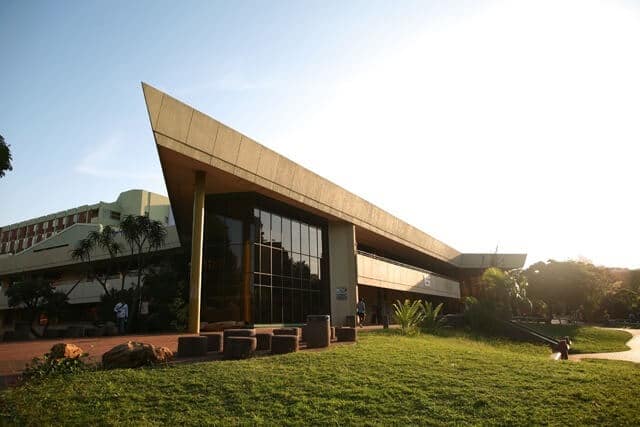
Durban University of Technology (DUT)
Durban University of Technology (DUT) is a leading public university of technology located in KwaZulu-Natal, South Africa. Established in 2002 following the merger of Technikon Natal and ML Sultan Technikon, DUT has emerged as a premier institution dedicated to providing quality higher education and practical skills development. With approximately 33,000 students across multiple campuses, DUT serves as a beacon of academic excellence and innovation in the region.
The university operates across seven strategic campuses positioned throughout Durban and Pietermaritzburg, enabling accessible education to students across KwaZulu-Natal. DUT’s commitment to technology-driven education and practical application ensures graduates are employment-ready and equipped with industry-relevant skills.
Known for its industry partnerships and work-integrated learning initiatives, DUT bridges the gap between academic theory and practical workplace experience. The university’s focus on engineering, information technology, health sciences, and management disciplines positions graduates as valuable contributors to South Africa’s economic development.
DUT operates seven strategically positioned campuses throughout Durban and Pietermaritzburg in KwaZulu-Natal. The Steve Biko Campus in Berea on Mansfield Road houses primary administrative offices, the library, and student support services. The ML Sultan Campus at 41/43 ML Sultan Road focuses on technical and specialized programmes. The Ritson Campus and City Campus are additional Durban locations.
In Pietermaritzburg, DUT maintains Riverside Campus in Scottsville with comprehensive facilities including lecture halls, laboratories, and student accommodation. Indumiso Campus in Edendale offers specialized programmes. The Brickfield Campus represents DUT’s continued expansion.
Across all campuses, DUT invests in modern lecture theaters, well-equipped laboratories, computer facilities, and collaborative learning spaces. Student accommodation is available at select campuses, with priority given to students from disadvantaged backgrounds. Prospective students are encouraged to visit their preferred campus during open days.
Fill in your details below and we will try and assist you with your education journey.
Tuition fees vary significantly across different faculties and programmes. For students paying tuition fees only, annual registration first installment amounts are approximately R4,200 for full-year students and R2,570 for semester-based students. Students residing in university accommodation should budget approximately R5,190 per semester.
Faculty-specific fees differ substantially—engineering and technology programmes often have higher costs due to specialized laboratory facilities. Application fees for South African applicants are R220, with international applicants paying R250. Late application fees of R470 apply. Beyond tuition, students must budget for accommodation, textbooks, technology requirements, and living expenses.
DUT is NSFAS eligible, meaning eligible South African students can access government funding to cover tuition and living costs. Various bursary schemes and student financial aid programmes are available through the Financial Aid Unit. Contact the DUT Finance Department at debtors@dut.ac.za or call +27 31 373 2653/5440.
DUT is a fully accredited NSFAS institution, making it accessible to eligible South African students. NSFAS provides comprehensive funding covering tuition fees and living costs. To qualify, you must be a South African citizen, demonstrate financial need, and be registered as a full-time student. Apply at www.nsfas.org.za, with applications typically opening in October each year.
Beyond NSFAS, DUT’s Financial Aid Unit administers additional bursary schemes funded by donors and corporate partners. The Financial Aid offices at Steve Biko Campus and Riverside Campus provide personalized guidance on all available funding options. The university also offers payment plan arrangements allowing students to pay in installments.
Part-time work opportunities through DUT’s Work-Study programme offer on-campus employment with flexible hours. Scholarship opportunities for high-achieving students are periodically advertised. For NSFAS enquiries, contact the toll-free helpline at 08000 67327.
Applying to DUT is conducted exclusively through the Central Applications Office (CAO). Visit www.cao.ac.za and create an online application account. Complete the form with your personal details, educational history, and programme preferences. You can select multiple DUT programmes in order of preference. South African applicants pay an application fee of R220, while international applicants pay R250.
When completing your application, carefully select your preferred programmes based on your NSC subjects, grades, and career aspirations. Late applications for selected 2026 programmes remain open with an additional R470 late application fee. After submitting, monitor your application status regularly and respond promptly to any requests for documentation.
If selected for admission, you’ll receive a provisional admission letter detailing conditions to fulfill. Complete registration at your designated campus, pay initial tuition fees, submit required documentation, and arrange accommodation. DUT’s student support teams at each campus assist with orientation and course selection.
Admission to DUT programmes requires a National Senior Certificate (NSC) or equivalent qualification with the necessary subjects and achievement levels. English language proficiency is mandatory. Depending on your chosen field, you may need Mathematics or Mathematical Literacy—engineering, IT, and science programmes typically require Mathematics.
DUT employs a ranking system based on achievement scores, meaning meeting minimum requirements does not guarantee admission. Competition is typically highest for programmes in Health Sciences, Engineering, and IT. Your Application Priority Score (APS) directly influences your competitiveness. First-time undergraduate applicants must apply exclusively through the Central Applications Office (CAO) at www.cao.ac.za.
Some programmes offer foundation or bridging courses for students requiring academic support. International applicants face additional requirements including passport verification and academic transcript translation. The admission process is competitive and merit-based; early application through CAO significantly improves your chances.
DUT delivers programmes through six dedicated faculties, offering qualifications across multiple disciplines. The university’s course offerings span from national diplomas and higher certificates to bachelor’s degrees and postgraduate qualifications.
In Engineering and the Built Environment, DUT offers diploma and BTech programmes in civil, mechanical, and electrical engineering. The Faculty of Accounting and Informatics provides ICT programmes with specializations in Applications Development, IoT, and Business Analysis. The Faculty of Sciences offers programmes in biotechnology, chemistry, food technology, and maritime studies.
Additional areas include Health Sciences covering nursing and public health; Arts and Education qualifications; and Management Sciences degrees in hospitality and business management. Each programme combines theoretical knowledge with practical work experience. DUT’s curriculum is regularly updated to reflect current market demands.
Planning your application timeline is crucial for successful admission to DUT in 2026. The Central Applications Office (CAO) manages all DUT applications. Most undergraduate programmes operate on an annual intake cycle, with application deadlines falling in late September for the majority of courses.
For the 2026 academic year, standard application deadlines closed on 30 November 2025, with most undergraduate courses accepting applications until 30 September 2025. Late applications remain available for selected programmes, though a late application fee of R470 applies. The university typically releases provisional admission letters during the following months.
Academic programme commencement typically occurs in February each year. Students who receive admission offers should prioritize completing registration, paying initial fees, and arranging accommodation well in advance. Early application is strongly recommended to secure your place in your preferred programme.
Head Office: in Berea on Mansfield Road houses primary administrative offices, the library, and student support services. The
Toll free contact number: +27 31 373 2653
General and Application Enquiries: debtors@dut.ac.za